• Disclaimer: I’m not a battery engineer. I’m documenting what I’m building and what I learned—verify safety-critical decisions with qualified experts.”

    If you’re converting a car to electric, you’ll quickly discover something: the motor is the easy part. The real work is the traction battery.

    This series walks you through designing an EV incl. battery box from scratch, based on my own manual transmission conversion project.

    Why the battery is the real challenge

    Coming from the combustion world, the natural starting point is the motor. From there, you pick an inverter to match. Both are largely off-the-shelf components you can specify in a day or two.

    Then you hit the battery pack.

    This is where the real work begins. Building an EV isn’t hard because of the happy path—starting the motor, driving around, having fun. It’s hard because you need to make the battery safe to work with during assembly, safe during normal operation, and critically, safe in an accident. The battery is simultaneously your energy storage, your biggest safety liability, and the most complex subsystem in the car.

    Unlike a motor or inverter you can buy as a unit, a battery pack is something you often have to design and build yourself, especially in a conversion project.

    System overview

    For my Caterham conversion project, I opted for a split battery system. I chose this configuration to maximize capacity and maintain a weight distribution roughly the same as the original setup.

    Here is an overview of the system: (latest version always available in my github)

    A diagram illustrating the electrical system architecture of an electric vehicle conversion project, showcasing the connections between the battery management system, isolation monitoring device, service disconnect, and other key components.

    Next I’ll cover a few components that aren’t super common outside EVs.

    Deep dive on selected components

    This section talks briefly about 3 system components that are very specific to electric vehicles.

    IMD – Isolation Monitoring Device

    In a high-voltage EV system, you typically want the HV battery to be galvanically isolated from the vehicle chassis (reference ground). If a fault connects HV to chassis, touching the wrong metal part at the wrong time can become dangerous.

    An IMD continuously monitors insulation resistance between the HV system and chassis—practically speaking, it checks whether either pole is leaking to ground (it’s not just the negative pole). If insulation resistance drops below a threshold, the system triggers a shutdown path (often via the safety loop), which results in opening the main contactors (AIRs) and isolating the pack from the rest of the car.

    Typical causes include damaged cables, pinched insulation, moisture ingress, or crash damage leading to unintended chassis contact.

    Precharge circuit

    Every inverter (and many HV devices) has input capacitance on the DC link. If you connect a battery directly to an “empty” DC link, you get an inrush current spike that can weld contactors, stress connectors, and generally make your day worse.

    A precharge circuit solves this by charging the DC link gently through a resistor before the full connection is made.

    A common startup sequence looks like this:

    1. Precharge contactor closes (current flows through a resistor into the HV bus / inverter capacitors).
    2. The system watches bus voltage rise until it reaches a threshold (often ~90–95% of pack voltage).
    3. Main contactors (AIRs) close to connect the pack directly.
    4. Precharge contactor opens (the resistor is bypassed/removed from the circuit).

    In my project I’m starting with a relatively high precharge resistance (e.g. 820 Ω) because I want a slower, more “ceremonial” ramp. That’s a preference not a universal recommendation. Precharge values are a trade-off between time, resistor power dissipation, and inrush limitation.

    Discharge circuit

    When the contactors open (shutdown, fault, service), you don’t want high voltage on the “outside” HV bus. Between inverter capacitors and DC/DC converters there can be meaningful stored energy even after disconnect.

    That’s why you need a discharge path for the HV bus. You can do this with:

    • an active discharge (controlled, switched, faster), or
    • a passive bleeder (simple, always present, slower)

    For simplicity, I went with a constant bleeder. The range impact is small, and the system stays simple. In my architecture, that means a resistor connected across the HV output on the load side of the contactors, so it can bleed down the external HV system when the pack is disconnected.

    Core components of a battery system

    Let’s break down the components you need in a battery system. I’m assuming you’re working with modules (like repurposed EV modules) rather than raw cells, which is the practical choice for most conversions.

    Connectors

    • HV Connector: connects pack HV output to the rest of the car (inverter, secondary pack, etc.)
      • e.g. HVSL1200022A1H10
    • LV Connector: carries low-voltage signals (CAN, interlocks, enable lines, sense, etc.)
      • e.g. DTM06-12SA

    Safety & isolation

    • AIR (Accumulator Isolation Relays) — High-voltage contactors that disconnect the battery in emergencies or during shutdown
      • e.g. EV200HAANA
    • MSD (Manual Service Disconnect) — Physical plug or lever to completely isolate the pack for safe servicing
      • e.g. MINIMSDF000F
    • Fuse — Overcurrent protection to prevent thermal runaway from short circuits
    • IMD (Isolation Monitoring Device) — Continuously monitors insulation resistance to detect ground faults before they become dangerous
      • Potentially integrated in the BMS which is the case for the Orion 2, otherwise Bender is a widely used brand.

    Power management

    • Battery modules — The energy storage cells themselves, typically lithium-ion in some form
    • BMS (Battery Management System) — Monitors individual cell voltages and temperatures, balances cells, and acts as the pack’s safety watchdog
      • e.g the Orion 2 from Orion BMS
    • Precharge circuit — Gradually charges the inverter’s capacitors before closing the main contactors (prevents damaging inrush current)
    • Discharge circuit — Safely bleeds down residual voltage when the system shuts down

    Sensing & control

    • Current sensor — Measures pack current for state-of-charge estimation and power limiting
      • Look for products that are packaged with the BMS – the EU Distributor for the Orion (evshop.eu) offers a compatible one
    • Voltage sensor — Monitors total pack voltage and monitors state and functionality of discharge circuit
      • I use the IVT-S sensor from Glashütte – mainly because it has a compatible digital interface with my VCU
    • VCU (Vehicle Control Unit) — The brain that orchestrates startup sequences, monitors safety conditions, and coordinates all subsystems
      • e.g. VCU300 from AEM electronics

    Charging & drive

    • DC/DC converter (HV → 12V) — Keeps the 12V system alive (powers the BMS, VCU, and other control electronics) through the HV battery
    • High-voltage charger — Charges the main battery pack (AC charging in my case)
    • Inverter — Converts DC battery power to AC for the motor
    • Electric motor — Converts electrical energy into mechanical motion

    I’ve kept descriptions brief here—the goal of this post is to give you an overview about the core components. Now that the system design is done and the mechanical design is underway – the next post will cover the first integration topics!

  • This post is about a project I’ve been thinking about for a long time—one I finally started over the holidays and plan to finish by summer 2026.

    I’m converting my Caterham from combustion to electric while keeping the overall concept—including the manual transmission. This will be a series of blog posts where I’ll share the journey over the coming months. The goal is to get it street legal and drive through the narrow roads in the Austrian Alps.

    Starting point

    This is my Super Seven—bought a couple of years ago and a dream come true as a former Formula Student participant. Now I want to do what I enjoyed so much back then when I studied electrical engineering: building cars. This time, I’m converting from combustion to manual electric—something I’d buy if it were available, but since it’s not, I’m building it myself.

    Front view of a green and yellow Caterham Super Seven sports car parked on a cobblestone street, showcasing its sleek design and manual transmission.

    The stats so far:

    • Weight: approx. 550kg
    • Engine: Rover K-Series 1.8 Inline-4
    • Gearbox: 5 speed manual

    Why manual

    I’m keeping the manual gearbox because I want to experiment with what a raw and engaging driving experience for an EV could look like. Nothing has convinced me yet—maybe it’s not possible, or maybe people have been overly focused on range and entertainment rather than the experience and sensation itself. This platform will be my personal exploration to see if there’s something unique to be created beyond the usual 0–60 stats.

    Concept

    The following simplified block diagram shows the overall concept:

    A simplified block diagram illustrating the overall concept of converting a Caterham car from combustion to electric, showing components like the manual gearbox, electric motor, HV battery, and VCU.

    Few comments:

    • The battery will be air-cooled with a fan to boost airflow when needed. Since this is an open vehicle, natural circulation around the passenger seat and through openings in the footwell will provide sufficient cooling
    • Since this is my first car rebuild, I’m keeping the power modest. I’ll use a Hyper 9 electric motor with 88kW—around 120hp. The manufacturer offers these motors as complete systems with an easy-to-manage inverter that runs at relatively low voltages.
    • The front radiator and fan will remain in the car, along with the pump, to cool the inverter and motor. Coolant will flow through the inverter first, then the motor—since the motor tolerates higher temperatures better than the inverter. All other components will be passively cooled in the former engine bay.
    • We’ll use off-the-shelf battery modules from Volkswagen—five modules with a nominal voltage of 29.6V each. This gives the high-voltage battery a total nominal voltage of 148V and a capacity of 34.25kWh. Each module weighs 32kg, so the complete battery pack will weigh approximately 160kg—replacing the passenger seat.
    A rectangular electric vehicle battery pack showing an aluminum casing.
    • As the voltage is too low (148VDC), we can’t support public DC charging – so the goal is to only support AC charging for now
    • The VCU will be the control unit that defines the car’s characteristics—how the accelerator pedal translates to acceleration. I want to develop step by step what a manual EV should feel like. This might include a rev limiter, very low torque at low RPM, and even simulated stalling. Some vibration while idling with modulated low torque, similar to modern sim racing wheels. This is the unit that will transform a collection of components into a unique driving experience.

    Next steps

    • I need to dig into the battery module interface details (cell voltages, temperatures, etc.) and select a final BMS.
    • Finalize the charging components and decide whether to go with a custom-designed VCU or something off the shelf.
    • I found a CAD model online to use as a starting point for the overall model — first for integrating the electric motor and building the battery pack.
    • Reach out and meet with authorities to understand all design requirements for street legality

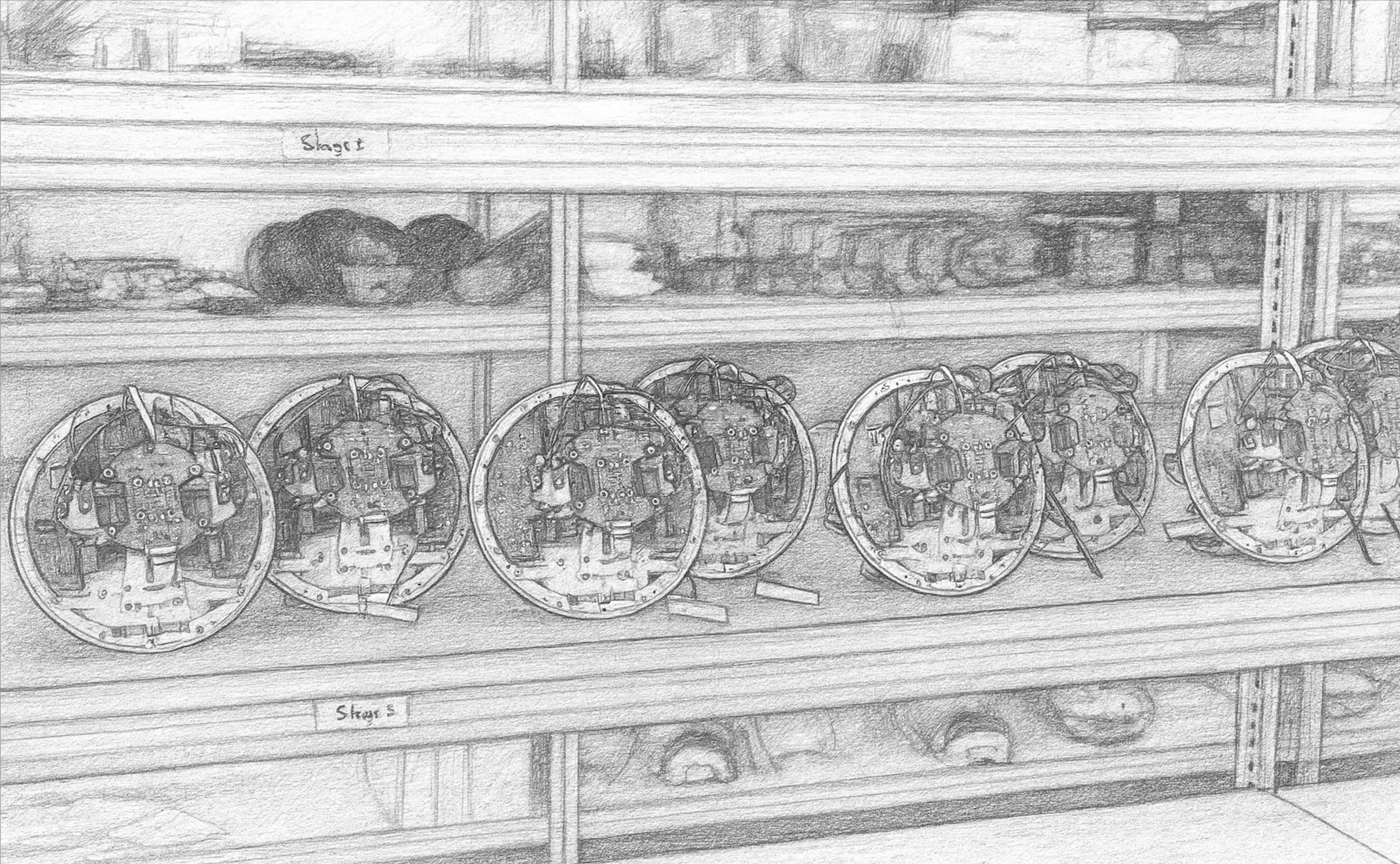
  • Between 2020 and 2024, my team built five generations of the Orb, manufactured thousands of units, and distributed them across the Americas, Europe and APAC. We started with in-house assembly, ended up working with Jabil, and somehow made it to the cover of TIME.

    A timeline showcasing five generations of the Orb device, displaying different internal components and designs from June 2020 to October 2021.

    Here’s what nearly killed us, what saved us, and what I’d do differently next time.

    The Real Work: Explaining the Cost of ‘Yes’

    In hardware, you’ll always start with a messy, overloaded product requirement sheet — that’s normal. The real challenge is not in saying no, but in helping others understand the cost of yes.

    When you’re responsible for bringing a physical product to life, you’re ultimately judged on three things: how much it costs, how reliable it is, and how fast you ship. Everything else is negotiable — but only if people across the company understand how their decisions impact those metrics.

    For us, early product development was shaped by deep commitments to privacy and data protection. That drove massive complexity into the compute stack, long before we had full visibility into what we’d actually need. In hindsight, I’d be less emotional about which requirements felt right to me personally, and more disciplined about communicating trade-offs — early, often, and clearly.

    Design vs. Engineering — and Why You Need Both

    Close-up of the internal components of a spherical device, showcasing circuit boards, wires, and a person's hand gesturing towards it.
    The first version worked. The latest one people actually wanted to touch.

    I’ll be honest — this one was a big learning for me.

    Coming from a traditional German engineering background, I was taught that functionality matters more than form. Design was seen as secondary. At german universities, we tend to joke about “fancy-looking” devices that sacrificed performance. And to some extent, that mindset makes sense — if your career ends up focused on industrial automation or power systems, nobody cares how pretty your inverter looks.

    But that perspective breaks down quickly when you build something that real people touch.

    The truth is: even in B2B, the companies that care about aesthetics often win. And in consumer markets, looks and brand drive decisions far more than most engineers want to admit. Functionality still matters, but it’s not enough.

    The tension between design and engineering is what creates great products — but only if both teams act like partners. If one side tries to strong-arm every decision, or refuses to compromise unless presented with hours of polished documentation, the process becomes painfully slow. It’s frustrating and drains energy from the team. The best outcomes happen when both sides are curious about each other’s constraints, not just fighting for their own priorities.

    Getting this right is a learning process. It won’t work perfectly from day one — and that’s okay. What matters is that both sides stay open, engaged, and willing to adjust as they go.

    I struggled with this more than I expected: getting the team to align on must haves, hard deadlines and clear engineering gates is never easy. But without them, debates over materials, radii, or manufacturing methods can spiral endlessly. All this reduces flexibility — that’s true — but they protect something more important: momentum. And momentum is what gets you to launch.

    Never Outsource Understanding

    Certifications took far more time than expected — and trusting consultants blindly was part of the problem.

    You need someone on your own team who truly understands the process — even if they’re learning it for the first time. Consultants will often give you overly optimistic timelines just to close the deal. You align your internal roadmap to that promise — and then get crushed by reality six months later.

    Also: always go local. Don’t use a German firm to manage Indian BIS certifications. Hire someone with on-the-ground relationships. It’ll save you time, money, and stress.

    Don’t Let Manufacturing Kill Your Momentum

    A modern workspace featuring multiple desks with computers, ergonomic chairs, and shelves filled with equipment and materials, showcasing a blend of office and manufacturing space.
    Codename “The Garage”: our first in-house production line back in 2021 — scrappy, chaotic, and exactly what we needed.

    If you’re early-stage and building hardware, try to keep as much manufacturing in-house as you can — at least through initial production runs. And yes – it will be scrappy and stressful BUT:

    The moment you move to a contract manufacturer, everything slows down. Contracts become complex. Communication gets filtered. Data formats clash. You’ll spend weeks pushing PDFs and Excel files across disconnected systems. And onboarding your product into their process is a project in itself.

    But here’s the nuance: going through that pain once is worth it. It shows you what not to do next time. It gives you the tools to ask better questions — and to recognize partners who still run on legacy processes.

    For us, one key tactic was pushing back against the “standard” path to mass production. We deliberately stuck with aluminum tooling longer than recommended, which let us continue iterating without resetting timelines. It wasn’t what our suppliers advised — but it was exactly what we needed.

    And of course, this isn’t black and white. You should outsource parts of the process that are well-defined and standardized — things like cable assembly or PCBA work are usually safe bets. But final assembly is for example a different story.

    Especially early on, when your testing programs are still evolving, handing off final assembly can create serious friction. If your engineer can’t access the line remotely and instead has to fly in, download logs onto a local machine, and work around your vendor’s IT restrictions — that’s a recipe for wasted time and frustration.

    Avoid the Commitment Trap

    Success can be dangerous. The moment funding lands, internal pressure builds to “lock in” supply — to secure components and capacity before it’s too late.

    That can lead to overcommitment, especially early in the product lifecycle. From experience, I’d say it’s almost always better to risk too much demand than too much stock. Suppliers are happy when you scale. They’re less happy when you cancel.

    In 2021, during the supply chain crunch, we locked in large volumes of Jetson Nanos — only to later realize we needed Xavier modules instead. Unwinding that deal while preserving the relationship was tough. I’m grateful we found a path forward.

    What I’d do differently in this example: never lock compute modules until firmware is at least in beta. And even then, cap commitments to 2× estimated year-one demand. It’s just not worth the downstream pain.

    Small Teams, Fast Decisions, Close to action

    A busy mall environment showcasing a demonstration booth for a product called 'Worldcon,' with two people interacting with shiny spherical devices while onlookers watch.
    Being close to the action revealed the mess: too much power draw, not enough battery. Operators nearly spent more time managing cables than customers.

    Speed comes from trust and proximity. For most of the Orb’s development, we had an extremely lean team — just one or two people per core function.

    It worked because decision-making was tight. There were no alignment meetings for circuit board design. No back-and-forth approvals. Just fast iteration and high trust.

    We also kept engineers close to the real-world use of the product. Letting someone who designed the hardware watch users struggle with it creates urgency. It makes flaws impossible to ignore.

    The other thing that mattered: no ego. Engineers counted inventory. They handled logistics. They filled in the gaps — not because it was their job, but because it had to get done. That attitude made all the difference.

    One example: the connector between the swappable battery and the Orb. Our original solution used a spring-loaded design — exposed gold pads on the battery side, and spring-loaded pins on the Orb side. It seemed elegant and robust. In our internal tests, the connector was cycled maybe two or three times a day. No problem.

    But in the real world, users weren’t just swapping batteries at a desk. They were holding the Orb while walking, tossing it in bags, carrying it across cities. That introduced constant micro-vibrations — and with a spring-loaded design, every vibration became a mini cycle. The result: the gold coating wore down within weeks. Friction increased. Eventually, the spring force was no longer enough to maintain contact. Power dropped. Resistance spiked. Devices failed in the field.

    Ironically, our attempt to improve reliability — by creating a sealed battery interface — became the very thing that broke it. You only see these patterns when you’re out there, observing how people actually use your product. Not how you imagined they would.

    We ended up replacing the entire connector system — moving to a more conventional plug-style interface. It solved the problem, but required changes to both the Orb and the battery pack, on a compressed timeline. Not fun — but exactly the kind of challenge small, fast teams are built for.

    Decentralized Manufacturing Is Still Broken

    This one’s still a huge unsolved problem.

    We wanted to decentralize manufacturing from day one — to align with the open-source nature of our project, and later also due to rising geopolitical risks and logistics costs. But unless you’re operating at massive volumes, most contract manufacturers simply aren’t set up to support flexible, multi-region production.

    The problem? Each country effectively becomes its own isolated project — different materials, different suppliers, different certifications. You lose consistency. You lose speed. And your operational complexity scales linearly with every new site.

    There’s a massive opportunity here for a new kind of player: distributed-first, scale-second, built on a modern data stack. One that can standardize BOMs, version control, and production processes across borders — natively. We’re not there yet. But someone will build it.

    One example from our own experience: my team was also responsible for the stands that held the Orbs in place during customer interactions. The original design used a specific type of wood — readily available in Europe, but nearly impossible to source in India or Latin America. Importing it wasn’t feasible either — too expensive, too slow, and wrapped in red tape.

    This is the kind of problem you don’t think about until you’re deep in deployment. Localizing manufacturing isn’t just about sourcing — it can force design changes. Our solution was to replace the wood with a metal structure, wrapped in a textured film that mimicked the original look. Visually indistinguishable, easy to produce locally, and far simpler to ship globally.

    These kinds of trade-offs show up everywhere — not just in tooling or electronics, but in the physical identity of the product itself. And today, most systems aren’t built to handle them well.

    Final Thought

    Looking back, there are a few things I’d do differently.

    I’d approach product requirements with more structure and less emotion. I’d keep final assembly in-house longer, even if that meant ramping slower. I’d stay flexible with suppliers, even if it meant paying more per unit. And I’d never lock components until we were close to launch.

    But more than anything, I’d double down on the team — small, trusted, close to the action, and willing to do whatever it takes.

    That’s what shipped the first Orb.

  • You’ve probably heard it a hundred times:

    You need to be passionate about the product you’re building.

    Sounds reasonable. But in practice, that advice can lead you down a frustrating path — especially when you’re still figuring out what to build.

    You start scanning your hobbies, trying to reverse-engineer a business. You ask yourself: What’s something I enjoy that could be turned into a product?

    It’s a loop I know well.

    What I Thought I Wanted

    I’ve always had a thing for cars. Not collecting them — building, tuning, driving. In university, I joined Formula Student, a competition where students build a full race car from scratch. I loved every part of it: designing systems, sourcing parts, seeing something come to life.

    Naturally, I thought: maybe one day I’ll start a car company.

    But when I actually looked at what that meant, it didn’t match the activities I loved. Starting a car company isn’t about building cars all day. It’s about B2C sales, maintenance networks, financing, marketing — a whole set of responsibilities that weren’t even on my radar back then.

    And that’s when I realized:

    It’s not about the product.

    It’s about the process.

    What You Actually Do Matters More

    What really energized me — then and now — was the act of creation: turning an idea into something real. The sketch, the prototype, the test run, the improvement loop.

    That’s what I’ve always enjoyed. And that’s what I try to optimize for.

    It sounds obvious, but many people forget this step. They fall in love with an outcome, and forget to ask: What will my day actually look like if this works?

    Because that’s what you’ll be doing most of the time. Not the launch tweet, not the keynote, not the investor pitch. Just… the work.

    And if you don’t enjoy the work, you won’t stick around long enough to win.

    Not Every CEO Loves Screws

    There are entire industries built by people who aren’t passionate about the product — but deeply obsessed with how value is created.

    Take screws or washers. I doubt any founder is passionate about the piece itself. But supply chain, logistics, inventory optimization, and distribution? That’s a different story.

    It’s not about being excited by what you sell. It’s about being energized by how you deliver it.

    Start With the Work

    So instead of chasing a “passion product,” ask yourself:

    • What kind of work do I actually enjoy doing?
    • What activities give me energy — even on the hard days?
    • Who do I want to work with or serve?
    • What type of customer do I feel aligned with — not just in need, but in values?

    In my case, I like designing systems, working with engineers, and solving technical problems that touch the physical world. But I also know there are industries I wouldn’t want to serve — no matter how interesting the engineering might be. Slot machines for casinos, for example, would be a hard no for me.

    That mix — the kind of work, the type of customer — should guide what you build next.

    Your Role Will Change — Be Prepared

    One more thing people don’t talk about enough: even if you start by doing what you love, your role will evolve.

    Writing code becomes managing a team.
    Talking to customers becomes building sales and marketing systems.
    Solving technical problems becomes solving human ones.
    And finance — like it or not — becomes your job.

    You don’t have to love every part of that. But you do need to own it.

    And if you’re lucky, you’ll grow into it over time. I did.

    Two Paths Forward

    Once you’re clear on the work you enjoy, there are two natural paths:

    1. Build a service company around it.

    That’s what I did with Blacbird Technologies.

    I focused on the things I enjoyed — building a team, engineering complex systems, setting up manufacturing — and built a service business around that.

    It had natural scale limits. But I genuinely liked showing up to work. And that matters.

    2. Build a product company where your favorite activities stay central.

    Not just in the early days — but even as the business scales.

    If you can design a system where the things you love doing continue to drive value, that’s a powerful long-term setup.

    A Quick Story: World

    When I joined World (previous “Worldcoin”) as a founding team member, it wasn’t because I was passionate about identity infrastructure.

    But the role was a perfect match for the work I loved.

    I got to:

    • Build a complex and unique hardware product from scratch
    • Scale manufacturing to thousands of units with a top-tier partner (Jabil)
    • Lead global certification, supply chain, and logistics
    • Build out field ops and maintenance at scale
    • Experience the growth of a global team from 10 to 500+, working with world-class talent

    It was a massive, chaotic, high-stakes project — and it matched the kind of work I love doing.

    The product didn’t need to be my lifelong obsession. The work is.

    And that’s why I enjoy it so much.

    Final Thought

    Don’t get stuck waiting for the perfect product to show up.

    Instead, start with the work.

    The kind of work you’ll do every day. The kind of work you want to get better at. The kind of work that feels meaningful.

    Because if you enjoy the process, you’ll stick with it long enough to build something great.

    And that’s what actually matters.

  • In today’s tech world, it’s easy to fall into a seductive trap: a breakthrough technology emerges, headlines proclaim a trillion-dollar opportunity — and somewhere, a founder starts building.

    But here’s the catch: many of these products begin with the tech, not the customer. The thinking goes: this tech is so powerful, it must be useful. So you build something elegant, maybe even groundbreaking — and then realize: you don’t know who it’s for. Or worse, the problem it solves isn’t real, or just isn’t painful enough to matter.

    I call this constructing use cases — and I’ve been there, during the Industry 4.0 hype cycle, when “smart factories” were the buzzword.

    What Does That Mean?

    Constructed use cases happen when you build a solution first, then go searching for a problem to match it. You start with a shiny tool — and construct a narrative around why the world needs it.

    On the surface, it looks innovative. You might attract investors, early adopters, even a bit of hype. But underneath, something’s off.

    The biggest red flag? You’re working too hard to convince people to use it. You’re pitching nonstop, reframing constantly, even giving it away just to get traction. That’s not product-market fit — it’s wishful thinking.

    Start Close to the Customer

    There’s a famous Steve Jobs quote: “You’ve got to start with the customer experience and work backwards to the technology.” (here) It sounds obvious, but when you’re deep in the build — especially as an engineer — it’s easy to forget.

    We fall in love with the how: elegant systems, clever hacks, novel architectures. And that’s fine for research. But in a company, your job is to solve something real.

    That starts by staying close to the action.

    Be in the room where your product is supposed to deliver impact. Watch how it’s actually used — not how you imagined it would be. Talk to the person on the front lines. Ask naive questions. You’ll get real feedback — some of it harsh, some surprising. But it’s the only way to know if you’re building something that matters.

    If you skip that step, you risk building a solution for a problem that only exists in your pitch deck.

    I learned that lesson the hard way.

    I’ve Been There

    At my previous company, ambos.io (now Setago.io), we built a technically impressive robotic station for assembly lines. It guided workers step-by-step, verified materials via weight sensors, and automatically reordered stock.

    It sounded great. But reality hit hard.

    Cloud-based systems were a non-starter for most factories — too many concerns around uptime, control, and data privacy. The average worker was assembling the same product all day — they didn’t need help finding the right screw. To avoid material shortages, they just used bigger bins. No automation needed. Meanwhile, a simple plastic shelf got the job done better, cheaper, and with less friction.

    We’d built something elegant — but fundamentally misaligned with what customers actually needed.

    The turning point came when we decoupled our software from the hardware. That let us focus on where the real value was: flexible, digital work instructions that run on any device.

    Setago today is a cloud-first platform that lets factories create, manage, and trace standardized instructions—without needing custom setups. Compared to paper binders and static PDFs still common on the shop floor, it’s faster to deploy, easier to update, and more scalable. You get integration with existing tools, smoother onboarding, fewer errors, and real-time visibility into what’s happening.

    That pivot wasn’t glamorous. It meant scrapping things we were proud of. But it became the foundation for everything that followed.

    The Test: Will They Pay?

    There’s no clearer signal of product-market fit than asking someone to pay.

    Pilots feel exciting. Managers want to try new tech, show it off, maybe impress a customer. But when you send a real quote — with real numbers — the conversation changes.

    Suddenly, you’re no longer selling a vision. You’re selling value. That’s when you learn whether you’ve really solved a problem.

    So charge early. Even for scrappy prototypes. Time-box free trials. Draft quotes. Watch how they react. That discomfort? It’s more honest than a dozen “this is super cool” emails

    Final Thought

    It’s not sexy to stay patient. It’s not glamorous to spend weeks talking to customers before writing a line of code. But it’s how great products — and great companies — are built.

    And trust me — working backwards, trying to retrofit a problem to a solution you’ve spent months building with your team, is brutal. The toll it takes on morale, momentum, and culture is real. It drains energy, erodes confidence, and makes every decision feel heavier. It’s not fun to live through.

    And maybe I’m not a deeptech purist — the kind of person who builds in a vacuum and waits for the world to catch up. I want to know who I’m building for. I want to be there when it clicks.

    Because nothing beats building something real — for someone who truly needs it.

    One Last Note

    That said — it’s not a universal truth.

    At World (prev Worldcoin), we did the opposite. We built into a vacuum (pre ChatGPT). There was no clear customer, no obvious market — just a strong belief that proof of personhood would become essential infrastructure for the internet. At the time, it felt almost philosophical. Today, it’s a widely acknowledged problem. In hindsight, we were early — but right.

    That experience taught me that some ideas do require building ahead of the curve. You’re not solving an immediate pain — you’re inventing a new category.

    Just know which game you’re playing.

  • I recently spent time digging deep into the humanoid robotics trend while evaluating potential venture ideas. Here are some of my takeaways.

    1. Building the Robot Isn’t the Exciting Part

    This might sound provocative, but as someone with a hardware background, I don’t believe that building the robot is where the most value lies. Hardware rarely creates defensible moats—only software and networks do.

    Some might point to Apple as a counterexample. But Apple’s enduring edge isn’t just hardware—it’s the App Store and the surrounding ecosystem. The ability to close the gap between hardware, OS, and third-party applications is what keeps users locked in.

    Tesla never built that layer. Outside of self-driving (which took too long to mature), it didn’t create a platform for others to extend the product. As a result, it feels like competitors are catching up—whether that’s perception or reality.

    2. Humanoids Aren’t Lifestyle Products

    Unlike Apple, humanoid robots in my opinion won’t be emotional or lifestyle-driven purchases. They’re functional—more like a refrigerator or TV. That means most buyers might make decisions based on price and capability, not brand affinity.

    And in function-first markets, margins are razor-thin. It’s a race to the bottom unless you control something more valuable than the hardware itself.

    3. Hardware Advantages Don’t Last

    Some argue that the real value lies in the neural networks shipped with the robots. But even here, I’m skeptical. As we’ve seen in the LLM space, once one player figures out a compelling method, that knowledge diffuses fast and becomes a commodity.

    Today, a robot picking up a vacuum and cleaning a room isn’t even surprising—we’ve seen versions of that in countless demo videos. The “wow” factor is fading quickly. The race is no longer about making robots impressive—it’s about making them useful at scale.

    4. China’s Manufacturing Edge—and What It Means for Margins

    No one beats China in hardware manufacturing in the short term—not because of cheap labor, but because of deep expertise and massive talent density in areas like injection molding, PCB assembly, and high-speed scaling (famous conclusion by Apple’s CEO Tim Cook https://www.youtube.com/watch?v=L9f5SQQKr5o)

    That depth of capability gives China the unique ability to rapidly industrialize entire product categories—faster and cheaper than almost anyone else.

    And once China enters a space—as we’ve seen with drones, batteries, and smartphones—margins tend to collapse. If your edge is mostly hardware, you’re on borrowed time.

    5. Do We Even Need Legs?

    The humanoid form factor has become a kind of religion. But for most practical tasks—sorting parts, moving boxes, stocking shelves—you don’t need legs. Arms, cameras, and good software get you 80% of the way there, at a fraction of the cost.

    Most of the advancements in robot neural networks will also benefit cheaper, fixed-base systems just as much as humanoids. The intelligence layer generalizes—what changes is the hardware cost and complexity.

    And if that’s true, the total addressable market for full humanoid bodies may be much smaller than people assume.


    So What Is Exciting?

    Despite all of this, Figure (a major humanoid robotics company in the Bay Area) has done something remarkable—beyond developing impressive hardware and iterating at an incredible pace: they created global excitement.

    Now, people are paying attention. Investors, policymakers, and even the broader public are engaged. The narrative has momentum—and that kind of narrative power opens doors: it helps attract funding, talent, partnerships, and deployment opportunities. It builds pressure to make the tech real.

    And that leads to the real question: How do we actually put humanoids to work?

    The Real Opportunity: The Application and Coordination Layers

    Every human entering a new workplace—whether it’s cleaning houses, filling shelves, or assembling parts—goes through onboarding, training, and coordination. There’s no magic. It takes time and human guidance.

    If there were an obvious way to remove that coordination layer, most businesses would’ve done it already. But it’s hard.

    And that’s where the real opportunity lies:

    • First, building the application layer that bridges the gap between humanoids (or other form factors) and actual job execution. Think: not just having a robot capable of reporting stock levels, but making that information actionable and useful across the workflow.
    • Second, developing the coordination layer—a system that mimics human workplace hierarchies and gradually reduces the need for human intervention. A single human should be able to supervise and orchestrate hundreds of humanoids, not just one or two.

    And critically, this opportunity should be explored as close to the end customer as possible—whether that’s hospitality, healthcare, logistics, or even retail operations in the U.S.; manufacturing and assembly in Europe or China; or aging care in Japan. The real-world context and staying close to the action matters just as much as the product.


    Final Thought

    If you’re not building the humanoid, you can stay hardware- and form-factor-agnostic—and that’s a powerful position. Focus on putting robots to work, not building the robots themselves. That’s where the moat will be.

  • This post is more about giving you context on how I think about business and what I’m interested in. Part of the reason for this blog is not just to preserve knowledge but to reflect and structure some of my thoughts.

    #1 — Make Clear and Fast Decisions

    If there’s one thing people consistently know me for, it’s this: clear and quick decision-making. Not everyone always likes it, and they’re not always perfect—but if someone comes to me with a problem or a question, they’ll leave with either an answer on the spot or a clear list of facts I need to decide. And with that, there’s a path forward that everyone can rally around.

    I’ve seen it firsthand—executives who can’t make decisions are a massive source of frustration and inertia, especially in high-performing teams. Most people try to minimize the risk of a bad decision by making fewer decisions overall. But I’d rather make more decisions, quickly, knowing most will be good enough and that we can adjust as we go.

    #2 — Stay Optimistic (Always)

    I have this strange personal trait: I thrive in crisis. When things go off the rails, I don’t shut down—I sharpen up. When others freeze, I often feel like I finally have a clear path to march toward. Honestly, I enjoy these moments more than the calm, day-to-day operations. They bring focus, urgency, and clarity.

    But the broader point is this: optimism is a superpower. Especially in tough times. It’s the mindset that lets you keep moving forward when others stall. Part of it comes with experience—you realize the world keeps spinning no matter what. But mostly, it’s a choice. Stay constructive. Stay calm. Break big problems into small ones. Keep making decisions. And above all: believe there’s a way through. Because there usually is.

    #3 — Keep It Simple

    The second thing I’m known for: I tend to overly simplify things. Not because I can’t go deep or sound sophisticated—but because I believe simplicity reflects how the world actually works.

    Most big moves in companies (and in the world) aren’t the result of complex models—they’re driven by money, power, or both. Once you accept that, you stop trying to solve problems with a perfect formula and instead focus on understanding people’s agendas. That’s the real unlock—for deal-making, team building, even hardware product design.

    #4 — Walk Your Talk

    If shit hits the fan, I’ll be on the ground. Counting screws. Debugging firmware. Wrestling with software. Everyone I’ve worked with knows this. I don’t believe in hiding behind PowerPoints, reporting chains, or leadership frameworks. Leaders need to stay close to what’s actually happening.

    Some people don’t like that. I’ve had moments where jumping the hierarchy made someone else look bad because they weren’t close enough to the action. But I don’t care. The unfair context you get from being hands-on is what makes your decisions better and more grounded in reality.

    #5 — Build the Personal Brands of Your Team

    I’ve never tried to pretend I did everything myself. I’m nothing without my team—and I make sure they’re seen, both inside and outside the company. I want the world to know who built what, and I want my team to have my full backing when they show up publicly.

    That’s how you build real loyalty and create careers that outlast any single project. Nothing’s more fulfilling than seeing someone I’ve worked with catch fire and become a company-wide champion.

    Final Thought

    These values didn’t come from books or off-sites—they came from doing the work, failing, adjusting, and building alongside great teams. I’m not sharing them because they’re universal truths, but because they’ve worked for me.

    If you’re leading anything—whether a team, a product, or a company—staying close to the action, cutting through noise, and backing your people will get you a lot further than playing it safe.

  • My name is Fabian Bodensteiner. I’m a German electrical engineer by training and started building companies early — around the age of 22.

    I began with a bootstrapped hardware consultancy called blacbird technologies, then co-founded a startup in the Industry 4.0 space (ambos.io, now known as setago.io). For the past five years, I’ve been part of the founding team at World (formerly Worldcoin), which I co-founded alongside my friend Alex Blania and Sam Altman.

    Why this blog?

    Mainly, to preserve knowledge.

    As my career evolved — from writing low-level firmware in C to negotiating global partnerships across the US and APAC — I realized how much gets lost if you don’t write things down. This blog is my way of documenting that journey.

    Why publish it?

    Honestly? Because I don’t see a downside.

    After spending years in open source environments like Worldcoin, I’ve come to believe that sharing—even unfinished or imperfect thinking—adds more value than it risks.

    This blog won’t be optimized for headlines or hype. It’ll be straightforward and natural — the way I’d explain things to a smart friend over coffee.

    What to expect

    Posts will fall into three main categories:

    • Deep dives on building companies, teams, and culture
    • Reflections on deals, mistakes, and hard-won lessons
    • Personal observations from the journey

    I aim to publish one piece per month. My backlog of topics should last at least a year — probably more.

    If even one post helps someone think more clearly, avoid a misstep, or feel less alone in their own journey — then this blog will have done its job.

    Thanks for reading,

    Fabian